
ARCHICAD IMPLEMENTATION
You do not have to move to Archicad on your own
Make the transition alongside people who have implemented Archicad in more than 200 firms, in Brazil and Portugal.
WHERE WE HAVE IMPLEMENTED ARCHICAD












Is moving to BIM worth it?
You have already seen that Archicad can change the way your firm works. But migrating is not simply installing software and running a training course. It means adapting processes, setting standards, reorganizing information and getting the team confident working inside a new logic.
And yes, at the start some things take longer. Anyone who says otherwise has never migrated a whole firm.
The problem is not Archicad. It is trying to learn the software, write the firm’s standards and work out an efficient way of working, all on your own and all at once.
Migration takes adaptation. Our job is to make that happen with structure and without risk.
That way your team does not have to find everything out by trial and error. Implementation turns the migration into a planned, structured process, guided by people who have been through it many times.

WHERE MIGRATIONS USUALLY STALL
What to avoid when moving to BIM
The live project becomes the guinea pig
The migration starts in the middle of a project with a client deadline, because it looked like the natural opportunity. When the deadline tightens, and it always does, the old file gets reopened to make the delivery. The migration is not cancelled, it is just pushed to the next project.
The team learns commands, not process
A generic course teaches you to use Archicad. It does not teach how your firm draws, documents and delivers. Each architect leaves the course and solves it their own way, and within a few months there are four different standards inside the same team.
There is no template, so every project starts from scratch
Layers, pens, dimensions, sheets, naming: without a base file, all of it is decided on the spot by whoever has the project open. Set up like that, Archicad really is more work than CAD, and the people saying so are not exaggerating.
The whole thing hangs on one person
The migration is handed to the architect who likes technology, while the partners watch from a distance. When that person goes on holiday, changes priorities or leaves, the migration goes with them, because it never became the firm’s decision.
None of the four is an Archicad problem. All four are process problems, and process can be fixed.
HOW IT WORKS
How an implementation runs
We understand before we build
Before we think about templates or training, we work out how your firm really works. Projects, documentation, standards, team, processes, pain points and goals. We do not start from an off-the-shelf model: the structure has to make sense to the people who will use it.
We build the firm’s structure
From that assessment, we build the Archicad template and workflows around how the firm actually works. The goal is not a good-looking template. It is a base that helps the team work better.
We train on the real process
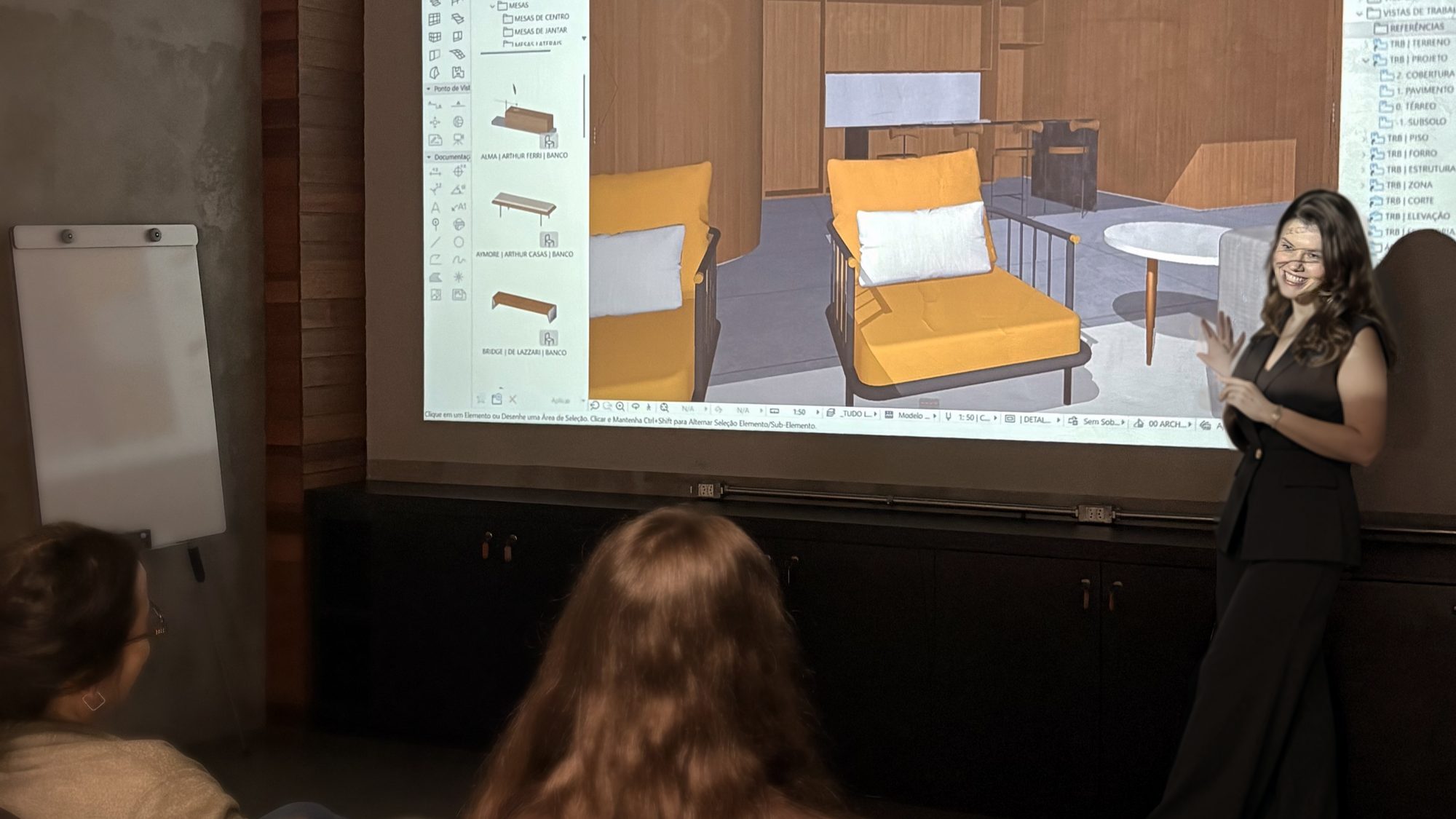
The team learns Archicad inside the logic built for the firm. Instead of simply showing where the tools are, we show how to use them inside the workflow you actually have to run.
We stay through the first projects
Real projects are where the questions and adjustments come up that no course can fully anticipate. We stay with the team through the first projects, until it no longer needs Migra to get the work done.
We have built several implementation formats for different kinds and sizes of firm. On the intro call we help you work out which one fits where you are now.

WHAT A TEMPLATE IS
The template is what holds the firm’s standards and automation together
Without one, the benefit of BIM takes far longer to show up.
Plenty of firms start using Archicad without a structured template, and then something predictable happens: every architect sets things up a different way, without quite knowing how. Some tasks have to be redone by hand, standards are not kept, and the firm starts forcing Archicad into shape. Which creates the feeling that working in Archicad is more work.
But the software should not require every project to start from zero.
A well-built template turns repeated decisions into firm standards and lets the team genuinely use what Archicad offers. It organizes the way the firm:
- models
- documents
- presents
- organizes information
- uses libraries and objects
- produces sheets
- extracts quantities
- runs repetitive tasks
The more Archicad knows about how your firm works, the less the team has to rebuild that logic on every project.

WHY NOW
There is a reason not to put this decision off much longer
Artificial intelligence is already changing stages like research, image generation, documentation and analysis. But to get anything out of those tools, a firm needs something technology alone does not supply: structured processes and information it can trust.
That is where BIM matters even more. A well-structured model and organized processes create a base ready not only for today’s work, but for whatever comes next into an architect’s routine.
The question is no longer just moving to Archicad. It is getting your firm ready for the next way of working.
WHY MIGRA
You are not buying a course. You are bringing experience and certainty to your migration
More than 200 firms have been through an implementation with our team. That means we have seen different teams, firm sizes, ways of working and levels of knowledge, and above all the problems that show up when a migration leaves the plan and meets a real project.
So our experience is not only in teaching Archicad. It is in knowing what has to be decided first, what usually goes wrong, where teams usually get stuck, and how to structure the process to reduce those risks.

SOMEONE WHO HAS BEEN THROUGH IT
"Today I can see it is definitely worth it"
When the team came and asked us to migrate, I went and studied what that transition actually meant. I understood that working in a BIM system lets you get the best out of your people: you use them for the creative work, which is what you really need, and not for the grunt work of producing base drawings, enlargements and sections. We can put our intelligence into design far more than into drafting.
Before the migration we lost a great deal of time. We were completely comfortable with the tool we were using, and we still lost a lot of time preparing those drawings: sections, elevations, views, coordination. Now I can see we focus far more on the design, on the architecture and on detailing, because all of that comes resolved, delivered by the software much faster.
The firm’s standards also improved a lot. A BIM system comes with standards built in, above all when you have a well-made template. You leave less room for each user’s interpretation, from electrics, lighting and circuits through to sheets and deliverables. Everything is more standardized, and our deliverables are more consistent.
Producing new drawings is very fast. When site asks for another section or another elevation, we generate it almost automatically, because it is already there. We only have to document it, put it on the sheet and deliver.
There is a process, no question: first learning a new piece of software, then the challenge of implementing it with the firm still running. But today I can see it is definitely worth it. Worth it for the time we gain on more complex house projects, with several disciplines overlapping: our coordination is far more efficient. And on apartment projects, where we already have a lot of things predefined, design time has got dramatically shorter.
Migra was fundamental in that process. From the first meetings with Erika I was full of questions: it was a program I did not know, processes I did not know. The experience they have makes all the difference and gives you enormous confidence, because you understand that everything has an answer. Their knowledge of Archicad itself, their ability to put together a flawless template and to resolve every question the team comes up with, is a real differentiator.
And one thing that still reassures me today: even after the course ended and the migration began, the Migra team is always available to answer questions, to see whether we are using something the wrong way or whether there is a better way to solve a given problem. That post-implementation support is fundamental for a migration to work and succeed. Without Migra’s support, our migration would definitely have been much harder.
WHO IT IS FOR
You do not have to be ready to migrate. You have to be ready to start
We do not expect your team to know Archicad already, or you to have a template ready, or everyone to be comfortable with the change straight away. That is part of our job.
This implementation makes sense if you:
- Want to move to Archicad but worry about losing productivity during the transition.
- Want to make the change with people who have implemented the software in many firms.
- Want Archicad to fit the firm’s process, rather than your team improvising a new process alone.
- Want to build a BIM base that can grow with the firm and with new technology.
And if that is not your case:
If you already use Archicad and only need to build or improve your template, the right service is probably the Custom template. If you only need to learn the software, Treinamento may be enough. But if the question is changing the way the firm works, implementation is the way.
FREQUENTLY ASKED QUESTIONS
The questions every firm has before migrating
Before you decide
It is, if the migration happens without a custom template and without structure. That is what usually happens to firms migrating alone or with a generic course: the team learns the software and has to invent its own way of setting everything up at the same time, by trial and error. That is exactly what the process fixes first.
There is an adjustment period in which the team produces more slowly, and it would be dishonest to say otherwise. What the structure does is shorten that period and make clear when it starts and when it ends. On the intro call we estimate it for your situation, taking into account size, type of project and what is already under way.
In most cases, yes. Firms that have tried before usually stopped for one of the reasons described above, and almost never because the team was not capable. The advantage of having tried is that you already know what did not work.
No, the team carries on as normal. On the intro call we explain how much time the process will take and what adjustments to work in progress will be needed, if any.
Some resistance at the start is natural, and it is a fair concern for whoever makes the decision. That is why we start by aligning with the partners before any change reaches the team, and the whole process keeps everyone involved instead of imposing it from above.
No. Projects under way stay where they are, and the migration starts on a project chosen together with you, taking deadline and complexity into account. Forcing the switch in the middle of a tight deadline is one of the most common ways a migration stalls.
It depends on which format suits your firm. On the intro call we look at your situation and present the right option, with clear figures. Request the intro call.
There is no minimum size. We have different formats for different team sizes and budgets, and the right one depends on how involved your team wants to be in building the template, and how much time it has for that.
How the process runs
Between 6 and 12 months, depending on size and format. After that we stay in touch with the firm.
The process is remote, and we work with firms across Brazil and in Portugal. We also work in person if the firm prefers, with travel costs covered by the firm.
Live and online. In your firm’s own closed group, the sessions are recorded for the team to go back to. We recommend groups of up to 12 people, but we adapt for larger ones when needed.
Not necessarily. Before we teach the software we work through the firm’s processes. On the intro call we advise on the right moment to buy the license.
Specific cases, and afterwards
Yes, we have worked with many firms moving from Revit to Archicad.
It does, but in that case the right route is usually our custom template process, not a full implementation. See the custom template.
Nothing is lost. What you have today is reviewed in the assessment, and whatever makes sense is carried into the new standard instead of starting over.
We stay in close contact with the firm. Many clients carry on with consulting packages to keep developing the team. See consulting.
RELATED SERVICES
Other ways of working with Migra


The hardest part of a migration is not learning new software. It is trying to change the way you work without knowing exactly how
You can work it out alone. You can test, get it wrong, redo it, set standards, abandon standards, train again and find out months later that you could have structured the whole thing differently. Or you can start with people who have walked this road more than 200 times.
I want to plan my migration